Willis Recovery Guide separates two work orders that show up in the same body after a Lake Conroe weekend. Acute muscle soreness from waterskiing, paddling, or hauling a boat is a fresh invoice, dated to that effort. Chronic joint stiffness that was already present on Wednesday is a subscription. Cold, heat, and light miss when both invoices share one envelope.
Saturday around Willis can mean ramp lines, trailer traffic, glare, and ski pulls your legs will not repeat at a desk. It can also mean a pontoon afternoon of sitting while the sun works harder than your muscles. Sunday adds chores and the FM 1097 corridor as boats head home. A quiet small-city evening then folds every ache into one lake story. Sharp pain, swelling, locking, giving way, numbness, or night pain needs a clinician. The sort below is for next-day muscle soreness and for stiffness older than the weekend.
Willis Recovery Guide keeps a fresh muscle invoice separate from stiffness that already spoke on Wednesday.
Two tissues a Willis Recovery Guide refuses to merge
A fresh invoice has a date. You can point at the muscle and expect the story to change across a few days. A subscription has a history. It was in the car on Wednesday, and the ramp did not create it. Merging them feels efficient because both can make Monday morning careful. The merge throws away the facts a coach can use.
Skiing, paddling, or hauling a boat can open a sore-muscle bill that Willis Recovery Guide dates to the weekend.
Soreness that starts after the ski, the paddle, or the haul
A windy paddle home, a set of ski pulls, or hauling the boat while trailers wait can leave a muscle heavy the same day and sore the next day or the day after. The pattern fits delayed soreness when the ache sits in the muscle you used, the effort was newer or harder than recent weeks, and walking still seems reasonable. Easy motion, food, and sleep are the base. Comfort tools do not rewrite the work.
A joint that complained before the ramp is a subscription Willis Recovery Guide refuses to file as new soreness.
Stiffness that already had a Wednesday
Hips that need a moment, a low back that bargains, knees that dislike the first stairs: if that was Wednesday, the lake did not invent it. Heat, a long sit on the boat, and a heavy cooler can raise the volume. The subscription is usually a motion you rarely practice, built from desks, driving, and evenings in one chair. The ramp may reveal that limit. It does not explain a hip that feels the same in a month with no boat. Write the age in plain language. This weekend, this week, or this season and longer. Willis Recovery Guide is mostly that sentence, kept honest.
Comfort is the goal that lets brief cold air become a candidate inside Willis Recovery Guide.
Why one label keeps sending the wrong tool
Recovery is a fine word at a cookout and a sloppy word on a plan. Cold that helped after a ski day gets aimed at a hip that has been stiff since spring. Heat that helps that hip gets aimed at brand-new muscle soreness. The tools are innocent. The filing is the problem. If Monday allows one sentence, say which invoice is speaking.
Willis Recovery Guide places infrared heat with stiffness that eases once you start to move.
Cold, heat, and light on a lake weekend
Three inputs stay in separate columns. Whole-body cryotherapy is brief very cold air. Infrared sauna is heat. Red and near-infrared light are photobiomodulation, a wavelength story rather than a temperature story. One lake-Monday ritual that uses all three teaches nothing, because every variable moved. A Willis Recovery Guide writes the goal in the margin before a chamber, a hot room, or a light bed enters the plan.
Red and near-infrared light stay a third column, which Willis Recovery Guide refuses to call a published dose.
Cold air when the goal is comfort
Brief cold air is a comfort candidate for fresh muscle soreness when you want a more tolerable next day. Some people notice the ache take up less attention afterward. That is a weak claim about repair and a poor reason to repeat cold after every effort. Cold exposure is the wrong experiment in pregnancy and in some cardiovascular conditions. This page cannot screen that history. If it applies to you, the cold column stays closed and the clinician who knows you owns the decision. The chamber is a short stay in very cold air, different from lake water or a long cold soak. If the month’s goal is adding muscle, this column is a poor default.
Mixed days get the louder complaint first, and that is the ramp rule Willis Recovery Guide actually uses.
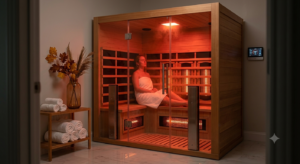
Heat when stiffness eases as you move
Infrared sauna fits stiffness that improves once you move. The first minutes of a walk are the worst, and a warm shower or a few easy laps make the joint more willing. Heat can support that willingness briefly. It does not install the range you skip all week. Headlines from traditional Finnish sauna bathing describe other rooms, temperatures, and durations. An infrared cabin does not inherit them. Sun on Lake Conroe can leave you thirsty and tired. That is a reason to drink and find shade, and it is a different exposure from a sauna entry on a log.
Willis Recovery Guide reads the review as immersion slightly better than passive rest for soreness.
Light for irritable tissue, with the dose left honest
Red and near-infrared light are the third column, for tissue that feels irritable without fitting a simple fresh invoice. A grumpy tendon region, or a spot you keep checking, often lands here. Published photobiomodulation protocols name wavelength, irradiance, and time. A studio bed or panel does not automatically match those numbers. You can still test light as its own comfort or routine experiment, with cold and heat held still for a week. If the tissue is focal, worsening, or mechanically scary, the next visit is clinical.
Analyses favored about 11–15°C for about 11–15 minutes, which Willis Recovery Guide leaves in the water.
Four matches a Willis Recovery Guide uses after the ramp
After the trailer is parked, four matches cover most Willis weekends. Pick the match before the room. If two seem true, the louder complaint goes first. Louder means the one that changes how you walk, sleep, or work tomorrow.
Those trials immersed people, so Willis Recovery Guide will not rewrite them as a cryotherapy script.
Match one: fresh soreness, comfort as the goal
The muscle you used is sore, the calendar fits a delay, and you want Monday to be tolerable. Brief cold air can be a comfort trial. Easy walking stays the baseline. Skip a second novel workout whose only purpose is to outrun the ache. Judge the trial by a boring pair of outcomes. Ordinary movement felt more available, and sleep happened.
Whole-body cryotherapy is brief very cold air, and Willis Recovery Guide keeps that dose distinct.
Match two: stiffness that loosens when you move
The joint or the back was already limited on Wednesday, and motion helps more than stillness. Infrared heat can bridge into range you mean to practice. That might be a hinge at the hips, a stride that starts to feel like yours once the truck is rolling on FM 1097, or a shoulder that reaches the cooler without a plan. Heat without that practice is a pleasant room. If stiffness sharpens, swells, or never loosens, leave the studio plan.
Willis Recovery Guide treats regular post-lift cold immersion as a poor default when muscle growth is the goal.
Match three: irritable tissue and an honest light trial
A tendon that dislikes the same paddle stroke every weekend, or a region that stays talkative when the ski rope stays stored, can sit here. Red and near-infrared light may be a comfort trial, with the dose left unclaimed. Load still matters more than wavelengths you did not measure. If the same stroke keeps worsening the same spot, change the stroking dose and get the spot examined.
Active recovery stays the strength-day default, which Willis Recovery Guide writes down before any cold habit.
Match four: the mixed day, louder complaint first
Most weekends are mixed. Legs carry a fresh ski invoice, and a hip has been a subscription since the spring desk. Willis Recovery Guide does not average them. If the hip changes your gait and the leg soreness is fading, the hip is louder: heat, motion, and cold left off. If the legs make stairs sideways and the hip is background noise, comfort for the legs comes first, without a long heat session the same day. One change for one week. Bracing in a crosswind, then sitting in trailer traffic, can explain a cranky back on its own.
Willis Recovery Guide calls cold the wrong experiment in pregnancy and in some cardiovascular conditions.
Water-immersion trials are not a cryo script
The soreness studies people quote from a driveway are, in the cases that matter here, about bodies in cold water. A chamber of very cold air does not inherit their minutes. Willis Recovery Guide keeps those trials in the water where the methods put them.
Machado and colleagues’ review of cold-water immersion and muscle soreness compared immersion with passive rest. The review found immersion slightly better than passive rest for managing soreness. Analyses favored about 11–15°C for about 11–15 minutes. People were in water. The comparison was rest, not a cryotherapy chamber. Whole-body cryotherapy in a studio is brief very cold air, a different medium and a different dose. Respect the review and still refuse to pretend a chamber session is that protocol. Easy walking remains available. The review never removed it.
Regular cold-water immersion after lifting has been tied to smaller strength gains than active recovery, so cold is a poor default when muscle growth is the goal. That tie belongs to repeated water immersion across a strength block. It is separate from one comfort trial after a rare ski Saturday, and it is not a script for brief cold air. If this month of lifting is supposed to make you stronger, skip the cold habit after those sessions. Active recovery, meaning easy movement, stays the default on growth days. Slightly better than rest is a modest claim about discomfort. It does not cover a strain or a joint you have not had examined.
A Monday audit you can finish in the driveway
Three lines finish the sort before you walk inside. That three-line note is the Monday form of a Willis Recovery Guide. Where it is, muscle or joint, and which side. When it started, this weekend or before Wednesday. What you want, next-day comfort or a stronger month in the gym. A blank second line means you are guessing, which is how the two invoices share a tool. Swelling, night pain, locking, giving way, chest symptoms, or a cold plan that meets pregnancy or a known cardiovascular problem stops the studio experiment. Heat and light do not route around that stop.
Then one column for one week. Cold air, or heat plus the motion the stiffness needs, or a light trial with the dose unclaimed. Hold the other columns still. Better, unchanged, or worse is a result, and a result beats loyalty to a room. Bring the three lines if you want a second set of eyes. A membership can make that reread repeatable. The lines still decide the column.
If the invoices stay tangled, use the 60-second vitality quiz. It treats muscle and joint recovery as its own topic. The page lists an optional whole-body cryotherapy pass for $10 and describes that session as a $29 value. Optional means the questions can end without cold. The pass is a comfort test for fresh soreness, a weak plan for a joint subscription, and a poor finish for a growth block.
When evening tension is the louder problem, the two-week nervous system checks fit better. When the week is a chair, a pontoon, and one proud Saturday, the weekly activity dose for lake years asks whether movement primes anything between boat days.
LifeRx Wellness
📍 10655 FM 1097 West, Willis, TX 77318
📞 (936) 259-5009
🌐 liferxwellness.com