

Willis Longevity Protocol calls the pontoon what it is. The boat is rest, and rest is not a protocol. Passive sitting does not prime vessels or muscle in active seniors, and it does not do that job for weekend boaters who want more years of Lake Conroe. A good Saturday can still be a week that never asked the body to work.
Willis sits close enough to the ramps that a pretty day becomes a plan. Trailer traffic stacks, the FM 1097 corridor fills, and the reward is water. Some of that reward is skiing or a long paddle. A lot of it is a chair on a deck, sun on the shoulders, and a cooler within reach. The small-city evening afterward feels earned. Earned rest is allowed. Counting it as the week’s training is the mistake this page is about.
Willis Longevity Protocol calls a pontoon afternoon rest and refuses to file rest as a protocol.
The pontoon is rest and rest is not a protocol
Rest restores attention, drops the social noise of a weekday, and gives joints a break from a single chair at a desk. Those are real goods. A protocol is a repeated behavior aimed at a capacity you want later: enough leg strength to step off a dock, enough balance to handle a wake, enough easy walking that a long sit does not own the arteries’ week. Rest and protocol answer different questions. Mixing them produces a person who is loyal to the lake and surprised by the first flight of stairs on Monday.
Passive sitting does not prime vessels or muscle, which is the line Willis Longevity Protocol holds.
What a beautiful sit is allowed to be
A pontoon hour can be quiet, social, and genuinely restorative. Shade, water, and a slower conversation are legitimate parts of a life. Sleep you protect that night may do more for the following week than any add-on. None of that requires the sit to double as fitness. Call it rest. A Willis Longevity Protocol stops asking that sit to prime tissue it never loaded.
Active seniors still want the next decade of lake time, so Willis Longevity Protocol asks what the dock requires.
What the next decade actually bills
The next decade of lake time bills you for ordinary tasks. Climbing onto a boat. Hauling a line. Standing in trailer traffic while the sun bears down. Carrying a cooler across uneven ground. Turning to watch a skier. Those tasks need strength, balance, and a tolerance for effort that a deck chair does not rehearse. Active seniors feel the gap first. Younger boaters collect the same gap more quietly, as a week of sitting with a heroic Saturday taped on the end.
Willis Longevity Protocol lists no real muscle tension as the first limit of a beautiful sit.
Five limits of passive rest inside a Willis Longevity Protocol
Five limits keep the pontoon in its lane. A Willis Longevity Protocol uses them as a filter before heat, cold, or a light bed is asked to stand in for movement.
Shear stress comes from movement, and Willis Longevity Protocol will not pretend lounging creates it.
No muscle tension worth the name
Muscle keeps capacity when it produces tension against a load, repeatedly, across weeks. A deck chair asks the postural muscles for a slouch, not for a hinge, a step-up, or a carry. Without tension, the signal to keep muscle is thin. You can feel relaxed and still be detraining the exact strength the dock will want later. Resting a tired muscle after a real session is different. The pontoon default, for many Willis weekends, is the session that never happened.
Heat without fitness is a separate limit, which Willis Longevity Protocol applies to sun and to infrared cabins.
No shear stress from movement
Vessels care about flow that changes because muscle is working. Rhythmic contraction and the steps of a walk create shear along the vessel wall, a mechanical signal tied to vascular health. Sitting, even on beautiful water, leaves that signal quiet. Lounging is not a milder form of walking. It is the absence of the thing walking does. Heat can widen vessels in the skin. That warmth is not the shear pattern of a walk.
Sun fatigue can feel like work, and Willis Longevity Protocol still wants minutes you can name as effort.
Heat without fitness
Lake sun is heat. An infrared sauna is also heat, in a different room, and it is not a Finnish sauna study you can borrow by association. Either kind of heat can make you flushed, thirsty, and tired. Fatigue is not fitness. A sauna session is not moderate activity, and a long afternoon in the sun is not either. If you use infrared heat for comfort or for stiffness that eases when you move, keep that goal in its own column. The soreness and stiffness sort is where that column is already drawn. Do not pay the heat a wage it did not earn in fitness.
One lake Saturday cannot repay a sitting week, which Willis Longevity Protocol treats as the fifth limit.
Sun fatigue mistaken for a workout
Hours of glare, heat, and wind leave people wiped out. The wipeout is a reason to drink, to find shade, and to respect sleep. It is a poor entry in a training log. You did not accumulate moderate activity by squinting. Waterskiing and a hard paddle are different. They include effort you can name. A pontoon day that was mostly sitting does not become those efforts because you were outdoors. Write the difference in one line: hours on the water, minutes actually working.
Willis Longevity Protocol keeps the finding that very high sitting was not tied to higher mortality in the most active.
A week of sitting repaid by one lake Saturday
The fifth limit is the calendar. Five days of desk, car, and evening chair, repaid by one Saturday on the lake, is a story people in this corridor tell with a straight face. One active Saturday is a good day. It is not a receipt for the other days. If Saturday itself was a pontoon sit, the receipt is blank. The body keeps the week you repeated, not the week you described at dinner.
About 60–75 daily moderate minutes marked that active group, which Willis Longevity Protocol refuses to shrink.
Vascular priming versus lounging on the water
Priming, in the practical sense, means giving vessels and muscle a reason to stay capable. Movement does that through tension and through the flow changes that come with it. Lounging on the water does the opposite for those hours: muscles idle, and the long sit looks like the workday with a better view. The research trail on sitting is easy to half-read, so read it at the size it was done.
High television time was only partly offset, so Willis Longevity Protocol counts small-city screen evenings too.
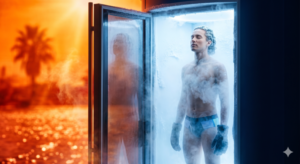
Ekelund and colleagues on sitting time, activity, and mortality reported an observational meta-analysis of more than a million adults. Very high daily sitting was not tied to higher all-cause mortality in the most active group. That group was doing about 60–75 minutes of moderate activity a day. High television time was only partly offset by that same activity. These are associations, not an assignment to buy a boat or to skip walking. They still draw a bright line. A large dose of real moderate movement traveled with a different mortality pattern than sitting plus good intentions. A pontoon does not deliver 60–75 minutes of moderate activity because the view was excellent. A cryotherapy session does not either. Whole-body cryotherapy is brief very cold air. It is not a walk. An infrared cabin is heat, not that activity dose. Red and near-infrared light are a wavelength exposure, not shear from your own muscles. None of the three replaces the movement the analysis was talking about.
A cryotherapy session is brief cold air, and Willis Longevity Protocol refuses to call it the activity dose.
The television finding matters locally after dark. A small-city evening of screens is high television time in ordinary clothes. The analysis suggests high TV time is only partly offset even when activity is high. An evening on the couch does not become harmless because Saturday included a ramp. If you want the protective pattern the active group showed, the minutes have to exist on most days, at a moderate effort: a walk that warms you, a carry, a set of stairs you do not avoid. Spread across the day is allowed. Inventing them on Sunday night is not.
Infrared heat is not that dose either, which Willis Longevity Protocol keeps separate from a walk.
Active seniors who still want the next decade of lake time
Active seniors around Lake Conroe often have the motivation and a joint or two that negotiates. The useful target is specific. Get off a pontoon without a strategy. Stand on a dock while a wake hits. Lift a cooler without holding your breath. Walk the ramp area while trailer traffic inches along, rather than treating the wait as more sitting. Those are healthspan tasks disguised as chores.
Red and near-infrared light do not create shear, so Willis Longevity Protocol leaves them out of the movement column.
Two or three short bouts of walking on weekdays, plus a couple of simple strength practices for legs and grip, will do more for that list than a longer sit in the sun. Moderate means you can talk, not that the effort is decorative. If a joint swells, locks, or gives way, that is a clinician visit. Ordinary stiffness that eases as you move can live beside a walking plan.
Cold exposure is the wrong experiment in pregnancy and in some cardiovascular conditions. Many active seniors are exactly the people for whom a cold dare is a bad idea. This page will not invent a screening script. If chest pain, a known heart condition, or an instruction from your own clinician is in the picture, brief very cold air stays off the menu. Heat and light stay separate, and they still do not count as the 60–75 minutes.
Healthspan as a weekly behavior, which is what a Willis Longevity Protocol means
Healthspan here means the years you can still do the lake tasks you care about. Willis Longevity Protocol means that outcome is a weekly behavior, not a room and not a single pretty Saturday. Count moderate minutes the way you count fuel before a launch. If the number is far from an hour a day, the first purchase is a pair of shoes you will actually walk in, used on the days the boat stays on the trailer. The pontoon remains available for rest. It stops being asked to do the protocol.
If you want the question in a standard form, take the 60-second vitality quiz. It asks about healthspan and about vascular priming through movement, rather than treating a lounge day as training. The page lists an optional whole-body cryotherapy pass for $10 and describes that session as a $29 value. Optional means the quiz can end without cold air. Cold is not the activity dose above, and it is the wrong experiment when pregnancy or some cardiovascular conditions are present. A membership can make the walking week repeatable with a coach who will ask whether the minutes happened. The minutes remain what a Willis Longevity Protocol will count.
LifeRx Wellness
📍 10655 FM 1097 West, Willis, TX 77318
📞 (936) 259-5009
🌐 liferxwellness.com